live_tv
Livestream Starting Soon
00
Hours
:
00
Minutes
:
00
Seconds
Up next in 10


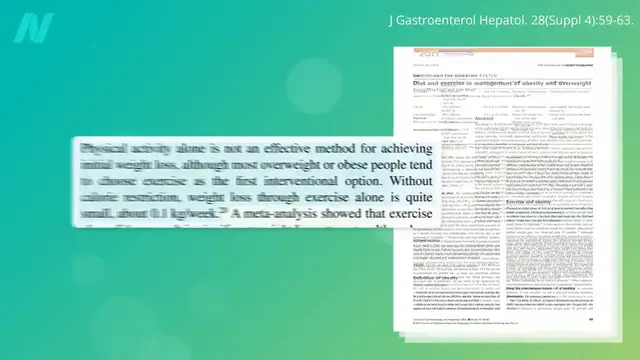
Exercise ramps up appetite, helping to explain why calories burned don’t necessarily equal calories lost, so how can we lose weight through physical activity?
//Creative Commons Attribution Licence video (Reuse allowed)
Show More Show Less View Video Transcript
0:00
Why Do We Overeat
0:07
Most overweight individuals evidently tend to choose exercise as their first approach to weight loss
0:12
When unrealistic hopes clash with reality, the disappointment may lead to an abandonment of weight loss efforts altogether as an exercise in futility
0:21
No pun intended. Our false expectations may also give us license to overeat
0:27
Our pie-in-the-sky notions about the power of exercise may just be used
0:31
to justify an extra slice of pie right here on Earth. Some researchers warn that labeling menus with calorie equivalents
0:39
of exercise could be counterproductive, backfiring if people rationalized their indulgences after a workout
0:46
This concern has actually been put to the test. Exercise psychologists took a group of men and women
0:52
put them on a stationary bike, and had them cycle until they burned either 50 calories or more than 250 calories
0:59
Unbeknownst to them, the researchers manipulated the machines to give false readouts, such that in actuality both groups
1:08
burned the same number of calories. They just thought they burned more or less
1:12
Then they were offered a meal 10 minutes later, ostensibly to measure the effects of exercise on taste perception
1:17
but the real purpose was to covertly measure how much people ate
1:22
Those who falsely believed they had burned off more calories did seem to demonstrate a greater license to eat
1:28
ending up eating significantly more calories, mostly in the form of chocolate chip cookies
1:34
After a workout, people may be tempted to treat themselves for their sweaty sacrifice
1:39
To prevent this knee-jerk reaction from undermining our efforts, we should strive to make exercise less of a chore
1:45
In a paper entitled, Is It Fun or Exercise? The Framing of Physical Activity Biases Subsequent Snacking
1:52
a study is described in which individuals were randomized to the same amount of physical activity, but just described differently
1:59
Half were told they were going on a scenic walk, and the other half were told they were going on an exercise walk
2:05
Afterwards, researchers covertly measured how much dessert everyone took at a subsequent meal
2:10
Those in the movement-as-exercise group reportedly served themselves about 35% more chocolate pudding than the movement-as-fun group
2:18
This is all the more reason to choose activities that are enjoyable, such as walking with friends, or while listening to music
2:23
or watching a video on the treadmill. Reframing exercise as play rather than work may not only make
2:30
for a more sustainable regimen, but may make us less likely to consciously or unconsciously feel the need to later reward ourselves
2:38
at the buffet line. Even just thinking about exercise may compel people to eat more food
2:44
Those randomized to simply read about physical activity went on to serve themselves nearly 60% more M&Ms
2:50
than those in the control group, adding up to hundreds of extra calories
2:54
The researchers conclude that simply imagining exercise leads participants to serve themselves more food
3:02
Expending energy through exercise may not just psychologically predispose us to eat more, but may physiologically make us hungrier
3:09
We evolved in the context of scarcity, so our body places great value
3:14
on rapidly replenishing lost fat stores. This helps explain why the average weight loss with exercise training
3:21
is only 30% of that predicted based on the number of extra calories burned
3:25
Calories in versus calories out can be complicated by the fact that changes on one side of the equation can affect the other side
3:32
In other words, we can work up an appetite. Carefully controlled studies show that caloric intake tends to rise over time
3:39
to match any increase in caloric expenditure, making significant weight loss through exercise alone remarkably difficult
3:46
This doesn't happen over a day or two. After a workout, there may not be an immediate increase in hunger
3:52
but averaged over the week or weeks, our appetite does tend to increase
3:57
to balance out most of the extra calories we've been burning. This calorie compensation isn't perfect though
4:04
so we can end up with a net loss in body fat, particularly at higher exercise levels
4:09
So the secret to weight loss through exercise may be sheer volume
4:13
at least 300 minutes a week, to achieve appreciable fat loss. This regulation of our appetite through activity works in both directions
4:22
Just as there exists a higher level of exercise, where we can start to outpace our appetite and lose weight
4:27
there's a lower level of exercise, where our body loses the ability
4:31
to sufficiently downgrade our appetite and we gain weight. This sedentary zone, where our appetite becomes uncoupled
4:38
from our activity level, appears to start at around 7,100 steps a day
4:43
So let's say you start out as a really active person, chowing down on nearly 2,900 calories a day
4:49
and for whatever reason have to cut back on exercise. You'd think you'd gain a lot of weight, but you're surprised that you don't
4:57
Basically, no increased odds of gaining significant body fat. What happened? With your drop in exercise came an inadvertent drop in appetite
5:06
But there's a limit to how far our appetite can drop. Once you cross that threshold, once you dip below logging
5:12
at least 7,100 steps or so a day on your pedometer, your appetite doesn't slow much further to match
5:18
and the pounds can start to pile on. Your body tries to keep your weight steady by adjusting your appetite
5:25
but we just weren't designed to handle such extreme low levels of movement
5:29
that sadly characterizes most of the U.S. population
#Beauty & Fitness
#Fitness
#Health
#Health Conditions
#Eating Disorders
#Obesity
#Nutrition
#Fitness Instruction & Personal Training